(and Why Winging It Isn’t Working)
If you’ve ever sat down on a Tuesday night trying to figure out what to post on Wednesday morning, this one’s for you.
I get it. You’re running a business. You’re juggling clients, invoices, inventory, staffing, and approximately four other jobs nobody officially gave you. Social media feels like the thing you’ll get to “when things calm down.” Spoiler: Things don’t calm down. So you end up posting when you remember to, about whatever’s in front of you, and hoping something sticks.
Here’s the truth. Winging it isn’t a strategy. It’s a coin flip. And your business deserves better odds than that.
What a Content Calendar Actually Is
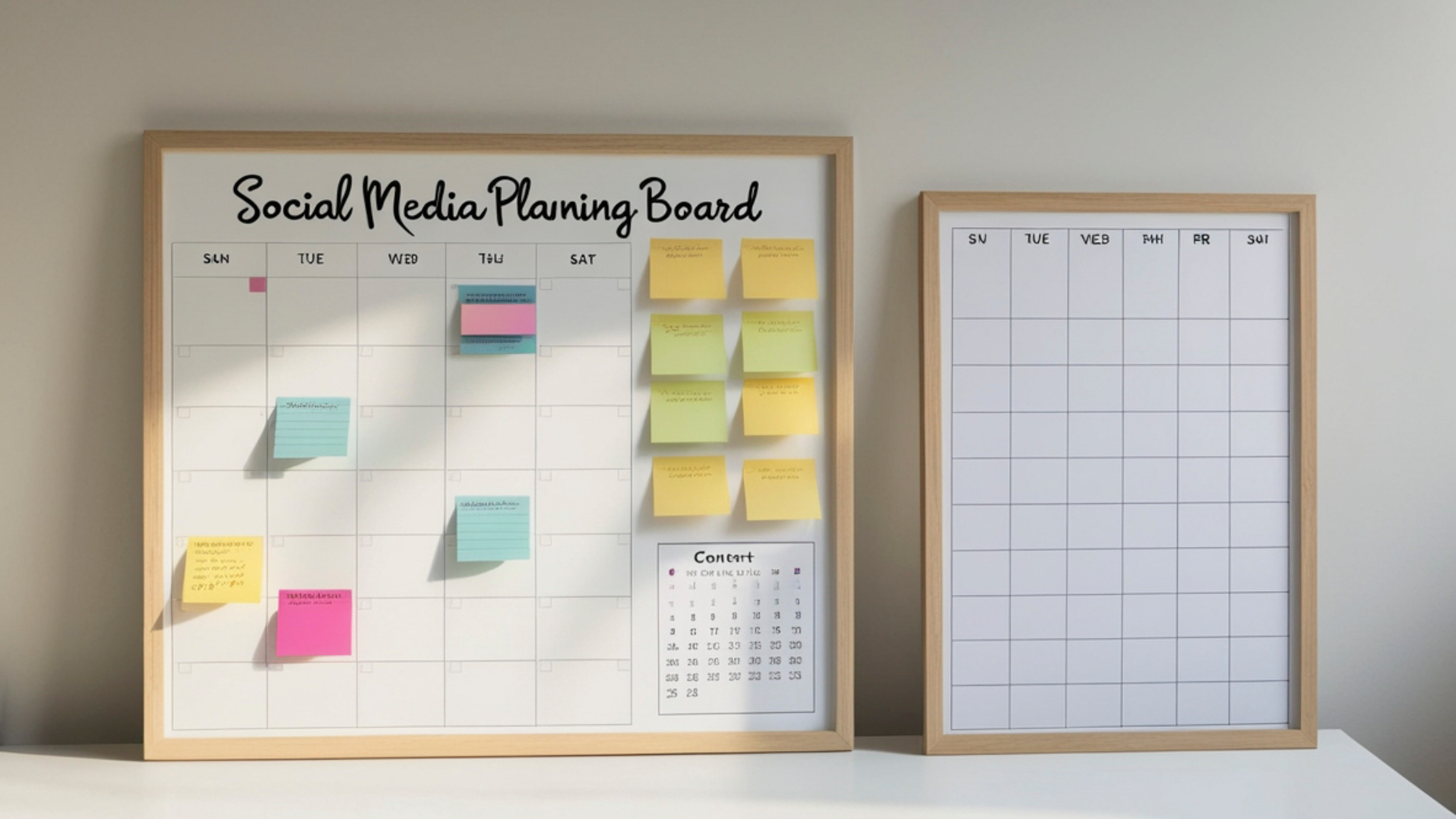
A content calendar is not just a list of dates with “post something” next to each. It’s a plan that connects what you post to what you’re actually trying to accomplish, whether that’s more foot traffic, more leads, more donations, or just staying top of mind with the people who already love you.
A real content calendar answers four questions before you ever open Canva:
What are we talking about? Every post should tie back to a theme, a service, a story, or a goal. Random posting leads to random results.
Who is this for? Your Instagram and LinkedIn audiences are not the same people, even if some overlap. A calendar forces you to think about who’s actually on the other end of the post.
When is it going out? Timing matters more than people think. Grant deadlines, event dates, seasonal moments, all of it should shape when content goes live, not just what content says.
Why does it matter? If you can’t answer why a post exists, it probably shouldn’t.
Why Winging It Isn’t Working
Let’s talk about what actually happens when you post without a plan.
You post inconsistently. Some weeks you’re everywhere, other weeks you disappear for two and a half weeks, and nobody notices until your engagement tanks.
You repeat yourself without realizing it. Without a calendar to reference, you end up posting the same “meet the team” content three times in two months because you forgot you already covered it.
You miss the moments that matter. Local events, awareness months, industry news, and grant cycles. These are golden opportunities to show up in a timely, relevant way, and they’re easy to miss when you’re only thinking a day ahead.
You burn out. Winging it is exhausting because you’re making decisions constantly instead of once. A calendar means the thinking happens in one sitting instead of every single morning at 8 AM while you’re also trying to open the store.
What Actually Goes Into a Good One
A content calendar that works has a few non-negotiable pieces.
- A theme or pillar for each week or month. This could be a service you offer, a value your business stands for, or a story you want to tell. Themes keep your content from feeling scattered.
- A content mix, not just a content list. Good calendars balance educational posts, behind-the-scenes moments, client or community stories, and the occasional straightforward promotional post. If every post is “buy this now,” people stop listening.
- Platform-specific plans, not copy-paste posts. What works on LinkedIn falls flat on Instagram, and what works on Instagram feels out of place on Facebook. A real calendar accounts for tone and format differences instead of blasting the same caption everywhere.
- Room for real life. Good calendars leave space for the unplanned stuff, a community event, a piece of good news, a moment worth capturing in real time. Structure shouldn’t mean rigid.
- A way to track what’s working. Even a simple system for noting what got engagement and what didn’t turns your calendar into something that improves over time, instead of a static document you build once and forget.
The Bottom Line
A content calendar isn’t about being buttoned up for its own sake. It’s about giving your marketing the same intentionality you give the rest of your business. You wouldn’t run your finances by winging it every month. Your marketing deserves that same level of care.
If building one feels like just another thing on your plate, that’s exactly the kind of work we love taking off people’s hands. Overthinking the strategy so you don’t have to is kind of our whole thing.